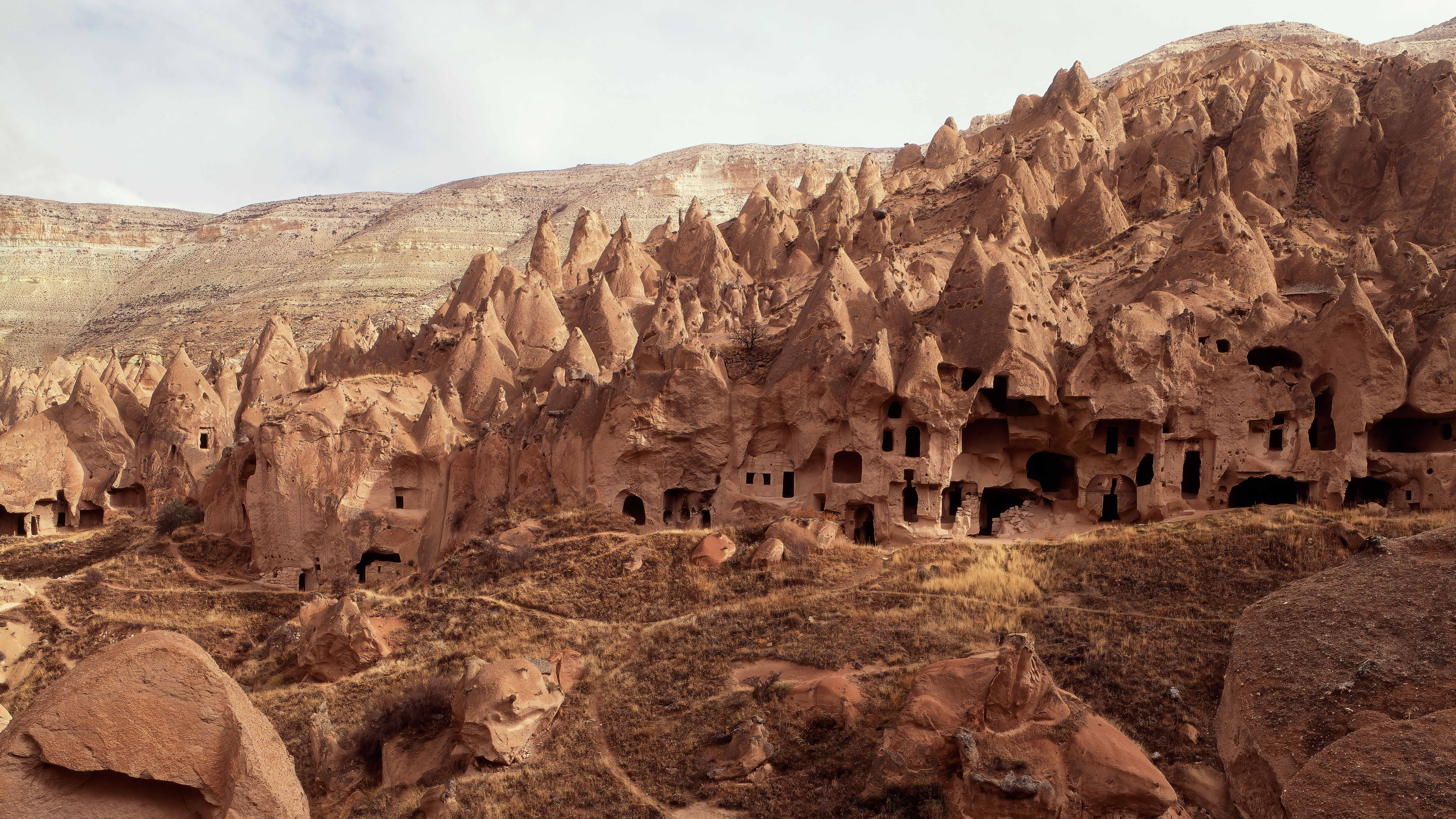
Few places on earth feel as sacred and mysterious as Cappadocia. Its soft volcanic rock was carved by early Christians into churches, monasteries and entire underground cities — a refuge of faith during centuries of persecution.
A Landscape Shaped by Faith
Cappadocia's famous fairy chimneys and valleys are more than a natural wonder — they are dotted with hundreds of rock-cut churches adorned with vivid Byzantine frescoes. The Göreme Open Air Museum preserves some of the finest, where scenes from the life of Christ still glow on cave ceilings a thousand years later.
Underground Cities of Refuge
When persecution came, the Christians of Cappadocia descended into vast underground cities such as Derinkuyu and Kaymaklı — multi-level networks with churches, wells, ventilation shafts and living quarters that could shelter thousands. Walking these tunnels is a humbling reminder of the price early believers paid to keep the faith.
The Cappadocian Fathers
Cappadocia gave the Church three of its most brilliant theologians — Basil the Great, Gregory of Nyssa, and Gregory of Nazianzus. Known as the Cappadocian Fathers, they defended the doctrine of the Trinity and shaped the Nicene Creed we still confess today. This quiet region profoundly influenced Christian theology forever.
A Place of Prayer and Reflection
Beyond its history, Cappadocia is simply one of the most spiritually moving landscapes in the world. Watching the sunrise over the valleys — perhaps from a hot air balloon — pilgrims find natural silence for prayer and worship.
Our Cappadocia pilgrimage combines these ancient sites with time for retreat and reflection, connecting the faith of the early Church with your own spiritual journey.
Experience This Journey
Related pilgrimages that visit the places in this article: